About Me

My photo
Patna, Bihar, India
Born and brought up in Shillong, Meghalaya.
Showing posts with label Article. Show all posts

Monday, May 18, 2009

From new govt, Muslims demand reservation, end to victimization on terror

By TCN Team,

New Delhi: While political parties are religiously concentrated on forging alliances and making new friends to grab Dillik ki Satta (central government) the Muslims, as the largest religious minority, feel detached thinking nothing will change for the community whoever comes to power. However, they have some genuine demands, both at local and national level, from the coming new government.

Muslims demand inclusion of the community in the reservation categories. They want more representation in legislatures, from Parliament to Panchayat. But what they urgently want from the new central government is the end of victimization of the community in the name of war against terror. Locally, they cry for proper civic amenities in Muslim dominated areas and a program for their development. But they are not much hopeful.


Ask about their expectations from the coming government at the centre, they will say: whoever comes to power, none is going to work for the welfare of the Muslim community. No political party is thinking honestly for the development of the community. They are using it just as a vote bank.

This is the general feeling of Muslims in any city.

A Jama Masjid area resident in Delhi says: No government works for the Muslim community. We have got fed up. In this Jama Masjid area there are several colonies which have no hospital and no marriage hall. No party, whether it is Congress or other, is sincere about the community. They just exploit the community for their own benefits. They treat us as vote bank.


Another one is more critical of the Congress for its apathy towards Muslim community since Independence: “The Congress has not done anything for the Muslim community. Since 1947 the party never fielded a Muslim candidate in Delhi. Congress is an open enemy of the Muslim community. Since Independence the party did nothing for the community. Muslims are being treated as a vote bank.” He demands more representation in legislature and “the government should stop the victimization of Muslim community in the name of terrorism.”

There are many in Delhi who want that Muslims should be given their rights. They should be given reservation. The government should sincerely work for the economic development of the community.


Like many in Delhi a Patna Muslim also does not pin much hope on the government. He says: whoever comes to power, none is going to work for the welfare of the Muslim community. Like in other parts of the world Muslims are being humiliated in India also. In the name of terrorism the community is being victimized. No political party is thinking honestly for the development of the community. They are using it just as a vote bank.

(Manzar Bilal and Mudassir Rizwan in Patna, Mumtaz Alam Falahi in Delhi)

Wednesday, May 6, 2009

Urdu Language essential to protect Islamic culture and identity: Rehan Ghani

By Manzar Bilal and Mudassir Rizwan, TwoCircles.net,

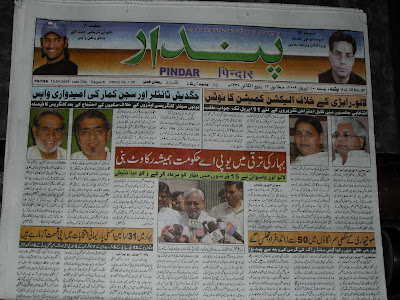
To solve problems facing Urdu Language in Bihar pressure groups should emerge once again like the ones that ensured it second official language status in the state, says Rehan Ghani, Managing Editor, Pindar, one of the oldest Urdu dailies in Bihar. Concerned with the Urdu speakers’ apathy towards the language, Ghani, also Associate Editor, Door Darshan, Patna, holds Urduwalas more responsible than the government for the sordid state of the language.


What are the difficulties and challenges before Urdu language in the country especially in Bihar?

Urdu language faces lots of difficulties and challenges from two sides: from the government and from the speakers of the language. Today a big problem is that we (Urdu speakers) have thrown out Urdu from our houses. Though we organize seminars and mushayera in metro cities we are not giving attention to the basic education of Urdu language. So, when the basic education of the language will stop then needless to say about its higher education.

There is a need for Urdu speakers to be aware of the problems and interests of the language. And they should think to solve its problems and protect its interests.

As for the difficulties from the government side, we cannot blame the government much because all the governments take decision when they are pressurized. For example, in Bihar Urdu is second official language but it got the status after much sacrifice of the community. Our forefathers sacrificed for it, they made a pressure group and put the demands before the government and also they made it an election issue until the government believed that Urdu speaking people became awake and if their demands were not fulfilled, the government would bear the political losses. Only then it accepted their demand and Urdu became second official language.

Today though Urdu language is facing problems from government but most of the problems are from our own side because we are not serious to solve the problems. Once again there is a need to make a pressure group only then the problems of the language will be solved both in Bihar and in the country. Therefore, I think that Urdu speakers and Urdu newspapers are themselves responsible for all the problems of Urdu.
What should be done to solve the problems?

The proprietors and editors of Urdu newspapers and well-wishers of the language from mainstream sections should sit together to point out the problems and see which problems we can solve and which ones can be solved by government. Then we should make a pressure group which would put pressure on government time to time. Actually most of the problems do not reach the government. Therefore, there is a need of a group which would make government aware about the problems of Urdu and also suggest the government ways to solve them.

Is it true that Urdu newspapers publish old news?

It is not true at all. Maybe this was happening 20 years back but in this age of internet, information and technology it is totally wrong to say that Urdu newspapers publish old news because today Urdu newspapers are as much updated as English and Hindi newspapers.

What is the circulation of Pindar?

(Smiling) when any one asks me about circulation of newspaper, I reply: do not ask any man about his salary and any woman about her age because they will never say truth about that. Similar is the case with newspapers. I am not proprietor therefore I cannot give you exact numbers. Yes, Pindar is in circulation and people of different parts of Bihar like it.
When did you join Pindar?

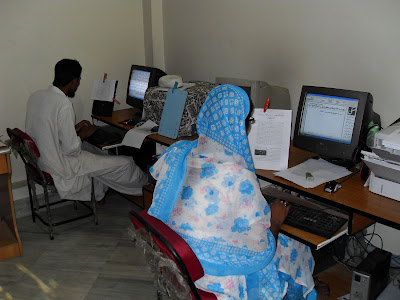
I joined ‘Pindar’ as Editor in 2004 when its proprietor decided to revive it. It is one of the oldest Urdu newspapers in Bihar but it was not in circulation for long. Soon after joining it I took several steps for its development. It is progressing day by day and now it is available in all parts of Bihar.

How will you assess the progress of Pindar in the last five years under your editorship?

Pindar progressed in terms of colour as well as number of pages. Earlier it was published in black and white and had 6 pages but now it is being published colours with 8 pages. Therefore people like it and its circulation is increasing day by day. But as a whole number of Urdu readers is decreasing which is the matter of concern for Urdu speaking people. The efforts which should be done to create awareness among people towards Urdu and Urdu newspapers are not going on so far. English or Hindi newspapers are using lots of means to attract people but Urdu newspapers are far behind in this regard.

What should be done for that?

Firstly, Urdu newspapers should increase their pages because English and Hindi newspapers have 20-28 pages but Urdu newspapers have hardly 6-12 pages which also contain advertisement then obviously we carry less material. Secondly, there should be columns for different topics. For example, the news from different parts of the country should be published separately. Similarly news about youths, women, job and economy should also be given specific spaces. Though I work with Pindar but in this regard I appreciate Roznama Rashtriya Sahara because it understood the need of the time. Therefore, it has more pages and every page for different issues. It carries news of almost all parts of Bihar. It brought out a revolution in the state Urdu journalism which created a competitive environment among the Urdu newspapers that surely benefited Urdu and Urdu journalism.
Did Roznama Rashtriya Sahara affect the readership of Pindar?

No. As a whole it did not affect Pindar because it has its own readers. It means that Pindar has been trying to build a good society because being Muslims we have some responsibilities about our religion and society. Therefore we do not carry nude pictures. We concentrate on carrying articles which may help to reform the society. We do not highlight the news of crimes and any such thing which may send a wrong message to the society because we believe that newspaper is one of the means to build good society and we will be asked about that. Because of these qualities Pindar has hold its place among a section of people.

How does government help Urdu newspapers?

In Bihar government helps Urdu newspapers more than in any other state. All those Urdu newspapers that are recognized by state government receive government advertisements and nowadays it is more compared to past. But on the other hand it is tragedy for Urdu journalism in Bihar that its working journalists are living miserable life.

Who can play an important role to solve the problems of Urdu newspapers?

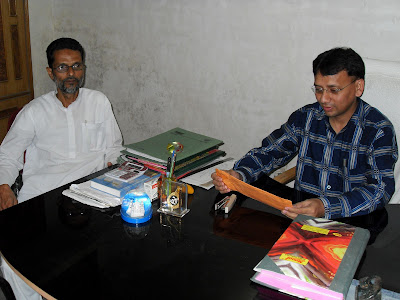
The roles of government, proprietors, wealthy people and common readers of Urdu newspapers are required to solve the problems of Urdu newspapers and problems will not be solved unless all of them perform their roles sincerely. I want to explain here one thing that in Bihar proprietors of the newspapers are generally editors also, it does not matter that he is journalist or not. But a daily newspaper named ‘Inqilab-e-Jadeed, published from Patna, changed this tradition and its owner appointed a working journalist as its editor. Following this step Pindar also did the same. Its owner honoured me by appointing me as chief editor of the daily but because of a controversial write-up of mine I was dismissed from that post. Currently I am managing editor of the daily.

Is the new generation going away from Urdu language?

Yes, the new generation is turning away from the language. But they are not responsible for that; rather we parents are responsible for this because we are getting materialistic and have forgot our responsibilities about our language, our culture and our identity. Of course, we should make efforts for our necessities but should also be careful about our culture and identity.

What is your message for Urdu speaking people?

I request youths that as they are learning science and technology etc. they should spend at least one hour out of 24 hours to learn their mother language because it is their responsibility to protect it and make all efforts for its development and if they will not understand this language, then how they can fight for its right? Therefore, they should try to understand the problems of Urdu because people who are fighting for the betterment of Urdu today they will not be in future and new generation will have to counter these problems. Parents should also teach their children Urdu and keep Urdu books and newspapers in their houses. Unfortunately today there are many houses of Urdu speaking people where Hindi and English newspapers are available but not Urdu newspaper. People should understand the fact that Urdu language is essential to protect our Islamic culture and identity and if Urdu language disappears we will lose our civilization and identity.

(About the interviewee (editor): Rehan Ghani started his journalism career with Urdu daily Sangam’ published from Patna under the editorship of late Ghulam Sarvar, ex-minister of Bihar. He also worked with ‘Qaumi Awaz’ another daily from Patna. Then he was appointed as Urdu translator in the state department of Rajbhasha and worked there for only two years as he felt that though he was appointed as Urdu translator he was working as a clerk and nothing related to Urdu language. He resigned and came back to Qaumi Awaz. He spent around six months with ‘Urdu Samachar’ in Nagpur. Then he joined Door Darshan, Patna, as associate editor and is continuing till date. He joined Pindar as editor in 2004.)

Tuesday, November 18, 2008

A masjid for women in Shillong

By Anju Azad for TwoCircles.net,

North Eastern states in India are comprised of more than 213 ethnically diverse groups and communities with distinct languages, culture, and social identities different from mainland India. Women in this region enjoy greater mobility. ‘Purdah’ and caste system is not so prevalent here. Women’s participation in economic activities is quite high and the Asia’s largest women’s markets ‘Ima market’ (‘Ima Keithel’ or Mother’s Market) is situated in Imphal, Manipur. All these factors have definitely left a positive impact in the life of Muslim women of this region. But patriarchal notions predominates all the liberal values and have restricted women’s mobility even in this part of India.

Like rest of India, women’s access to public religious places like masjids is restricted by the Muslim society of North East India. Women offering prayer five times a day in mosques is a taboo in almost all societies in India. It is often preached that women world is inside the four corner of the house of her husband and she should be happy with the ‘household’ work only.


Two women take a break from their work and offering noon-prayer in the Masjid


Inside the Masjid: Covered area is meant for women to offer namaz


Men looking at the entrance of the masjid exclusively built for women to offer prayers 5 times a day, in Shillong. September 21, 2008


Finally a shoe rack – Only for women

The establishment of a masjid exclusively for women in Shillong, Meghalaya is an answer to all these stereotyping tactics against women. The Masjid was inaugurated on August 29, 2008 and about 150 women took part in prayer on the very first day. ‘It’s a gift to our mother and sisters for the Ramadan’, said Sayedullah Nongrum, MLA and Secretary of the Shillong Muslim Union since 1982. Shillong Muslim union established in 1905 took the initiative in establishing a masjid that had facility for women as well.

Shillong Muslim Union was founded by Khan Bahadur Amjad Ali with the aim of catering the religious, socio-cultural needs of muslims in the entire East Bengal from Siliguri to Cox Bazar and from Chittagong to Dibrugarh in the present Assam. After partition of India, it narrowed down its jurisdiction to Assam. When Meghalaya was created in 1972 its jurisdiction was curtailed to only Meghalaya. Sir Sayedullah, Moinul Haque Choudhury had presided this organization.


Sayedullah Nongrum, MLA and secretary of Shillong Muslim Union who initiated and mobilized members of Shillong Muslim Union to establish the masjid for women

Shillong Muslim Union has established Unshyprio College which teaches Science, Art and Commerce and is considered as one of the best ranked colleges in the city. The most impressive part of the working of this organization is that they are secular in their activities and students across all culture and religion can come and study here. In fact right now non-Muslim students have outnumbered Muslim students in this college.

Shillong Muslim Union has a women wing too called ‘Shillong Mahila Majlish’ established in 1958 with the Zubeida Ataur Rehman as the founding president. It is a socio-religious organization meant for the upliftment of the muslim women. This forum became a meeting place for muslim women in Shillong. This year the organization celebrated its golden jubilee and brought out a souvenir.

Justifying women’s access to the masjid, Nongrum said, ‘I have seen Muslim women offering prayers with great difficulty in absence of space and privacy especially while at work or when she is out of the home. Many times I offered my office room to use for offering prayers. If our women ca go to market which is considered to be the worst place for a muslim women under the Sharia, we the menfolk are not objecting to it then why not women going to a masjid and offer prayer there? Why the fanatics are objecting to it? ‘

Mr. Nongrum strongly believes that the interpretation of Islamic laws is not free from the patriarchal notion. He said ‘I don’t believe in the interpretation of the fanatics. Purdah means the inner shyness of women. If the shyness is retained she can go anywhere. There’s nothing forbidden in going to a place and offer prayer.’ He said that about 40-50 women attends prayer everyday and the number is increasing day by day. Nongrum lamented that fanatics are forbidding women to come and pray in the masjid and he challenged the fanatics and said ‘they should come here and show me the scripts which prohibits women to go to a masjid. If men and women can pray together during hajj, why not in Shillong masjid?

Women, who participated in the prayer meeting on the 29th August, 2008 expressed great satisfaction and delight over the establishment of the masjid. Syeda Mushfiqua Haque and her daughter in law said ‘when we went for the prayer, we felt that we have achieved something and it gave us satisfaction of being empowered’.


Syeda Mushfiqua Haque with her daughter in law who attended prayers in the masjid

The opening of this masjid in Shillong is a step toward gender equality. If such initiatives are taken in every field and create space for women; Muslim women in this region too can contribute to their community and society.

Muslims in Shillong struggling to make their presence felt

By Mudassir Rizwan, TwoCircles.net,

Muslims settled down in Shillong in 17th century though, they are at best still struggling to make their presence felt. With migration of Muslims from Hindi heartland including Bihar and Uttar Pradesh, the position of local Muslims have got strengthened a little in Shillong that is dominated by Christians.

The capital of Meghalaya (The Abode of Clouds) an Indian state, Shillong is located at an altitude of 1496 metres above the sea level. It was a small village until 1864, when it became the new civil station of the Khasi and Jaintia hills.


Shillong that falls in the East Khasi Hills district was made capital of Assam in 1874 and remained so till January 1974. In 1972, Shillong became the capital of the newly formed state of Meghalaya. Shillong is also called “Scotland of the East.” The highest point of the entire state is the Shillong peak whose elevation is about 1965m above sea level.

Meghalaya is a region of great scenic beauty with lush, undulating hills, fertile valleys, 250 species of orchids, meandering rivers, waterfalls, sparkling mountain streams and lakes. The state is known for its natural beauty and the simple lifestyle of its tribal people. It is also known for Cherrapunjee, the wettest place on earth, which is only 56 kms away from Shillong.

Christianity is the main religion of Shillong and Meghalaya. However, a small number of Muslims also reside in Shillong. The people here are hard-working and simple. The Muslim population of the town comprises of the Khasi, Assamese, Bengali, Hindi and Nepali speaking people.

The Umshyrpi College which have 300 Muslim students and some minority schools like Madrasa Hemayatul Islam and Islamia Secondary High School are the examples of living presence of Muslims in the city of Shillong. For centuries, Muslims have been living in peace and harmony with the majority community.

The personalities like late Syed Muhammad Sadullah, the first premier of Assam, Sir Akbar Hydari, the first governor of Assam and late Fakhruddin Ali Ahmad who became the president of India once lived in Shillong and immensely contributed to its growth and development.

The total population of Meghalaya is 2,318,822, out of which Shillong has 660,923 according to the census 2001. Muslims are roughly around 60,000 in Shillong.

TwoCircles.net talked to Sayeedullah Nongrum, Health Minister of Meghalaya, to know about Muslims in Shillong and Meghalaya. He said the total population of Muslims in Meghalaya is 300,000 (approx). The total population of Tribal Muslims in Shillong is 13,000 and non-tribal Muslims including those from Bihar and UP is 50,000 (approx). They have been struggling hard for their socio-economic development and preservation of their religious and cultural identity, said Sayeedullah Nongrum. “I am also Tribal Muslim,” said Nongrum. Some Muslims are in government job, some have business like shoemaking and meat trade. Some have their own house and some in rent. Nongrum, MLA of Raja Bala in Garo Hills district, is also the general secretary of Shillong Muslim Union. Some other Muslim MLAs in Meghalaya are Abu Tahir Mandal of Phulbari and Abdus Saleh from Mahander Ganj in Garo Hills.

Non-natives of the state cannot buy land or house in their name.

There are six mosques in the city of Shillong. They are located at Police Bazar, Laban, Laitumkhra, Garikhana, Bara Pathar and Jhalupara. There are also two graveyards located at Laban and Mawprem, and three Idgah fields at Laitumkhra, Laban and Mawprem.

There are some Muslim organisations like SIO, Shillong Muslim Union, and NGO like Seng Bhalany Islam.

Monday, November 17, 2008

Hindu students of Quran

By Mudassir Rizwan, TwoCircles.net,

Patna: Madrasa Madinat-ul Islam is just like any other Madarsa in India. But a few students make this Madarsa different and very special. These students are Ashish Vidyarthi and Hemlata. They are the children of Mr. Dilip Kumar Chaudhury, an Indian Railway employee.

Ashish is 6-years-old and Hemlata is 9-years-old. They are studying the Holy Quran and the Urdu language at Madarsa Madinat-ul-Islam. It is situated in Khagaul, near Danapur Railway Station, Patna, Bihar. They are also studying in a local English medium School. Hemlata is studying in class IV and Ashish in class I. Their hectic schedule begins in the early hours of the morning. They return from school by 1 pm and after short break they head to the Madarsa immediately. They complete their studies in Madarsa by 4 pm. Their school teachers have pointed out to Mr. Chadhuri that the Madarsa education will put extra burden on Hemlata and Ashish. Mr. Chaudhri’s reply to the teachers was that any suffering in search of knowledge should be appreciated.


Ashish Vidyarthi and Hemlata

In an Interview with TwoCircles.net, Hemlata said "I was learning The Holy Quran to understand Islam and striving to be a Hafiza (female who memorize whole Quran) because I wanted to get enriched with all kinds of knowledge. She added that acquiring knowledge of any religion is a good practice."

She also mentioned that some of the neighbors had objected and remarked about studying in a Madarsa. They are continuing at the Madarsa due to their parents's strong motivation and support. Initially school friends used to ask Hemlata, why are you studying the Quran? In her elegant response she asked, why you are studying Hindi or English in school? Now school friends are very co-operative and understanding. Neighboring Muslims have empathy with them and are happy that they being Hindu are learning the Quran.

Presently she is reciting Aampara (30th Part of the Quran) and has completed Urdu Quaida, Yasarnal Quran. Younger brother, Ashish has started with Urdu Qaida.


Madarsa teacher Hafiz Mohammed Azmat Hussain appreciated the fact that Hemlata and Ashish are intelligent and able to memorize whatever they are taught in the Madarsa with ease, so they do not have to spend much time revising at home. He added she has a strong will to acquire knowledge. Other students of Madarsa are also supportive of Hemlata and Ashish.


Ashish Vidyarthi and Hemlata with parents

When father Dilip Kumar Chaudhry was asked about his motive behind enrolling his children in the Madarsa, he replied, "I was always attracted to the Quran from childhood as I had seen my father's close friend teaching the Quran". He added, I want my children to do well in life by gaining knowledge of different kinds of education especially from the Quran.


When reminded about media reports of terrorism and extremism being taught in Madarsa. He rejected this allegation and added this is not true, “Madarsas provide education like any other educational institution, they teach about Islam, justice, truth, service to humanity and love, not terrorism". He added, “Madarsas are being wrongly projected by the Media.”

This Madarsa is supervised by Maulana Mohammed Amanullah Qadri and it is run with the help of donations given by local people. There are 11 teachers and about 130 students presently studying here and the management has plans to provide modern education to its student in future.

Slideshow for this story


Video clip: