New Delhi: Common Muslims, whether in the National Capital of New Delhi or state capital like Patna, have not taken as surprising the findings of the 17-year-old Liberhan Commission. They aren’t a bit hopeful that the guilty of Babri Masjid demolition will ever be punished. At the same time, they have no good words for the Muslim leadership for what they did during the decades-long Babri movement.
Asked to comment on the indictment of Sangh Parivar leaders in the Liberhan Commission report for the Babri Masjid demolition, Delhi and Patna Muslims said the culprits of the Babri demolition were known to all as all that happened on December 6, 1992 in Ayodhya was telecast throughout the world. Yet, the Liberhan Commission took 17 years to find out them.
On how much hopeful they are about the punishment of the culprits of the demolition indicted in the Liberhan report, an elderly Muslim in Patna said: Nothing will happen to the culprits. Like reports of other commissions in the last 60 years, this will also meet the same fate. A Delhi man in mid-thirties said: I am not sure anyone will be punished. The entire issue of a criminal case has been and will be politicized. The government was not ready to table the report but after the leak it did so unwillingly.
Asked to comment on criticism of Muslim leaders by the Liberhan Commission for “failing the community and not presenting a consensus and constant view on the dispute neither in the court nor outside,” common Muslims were evenly divided in their views about Muslim leaders.
While a Patna resident said the Commission’s comment on Muslim leaders is correct as they did not put the Muslims’ point strongly, and they just cared for their chair, another in the same city, capital of Bihar, describes the commission’s comment as wrong.
Similar division is seen in Delhi.
While an elderly Muslim in the National Capital says that to criticize Muslim leaders in this case is wrong and unjustified, a youth’s view on the issue is just opposite.
“As for criticism of the Muslim leaders, Liberhan Commission is true as Muslim leaders then did not guide the community correctly. They did not put the view of the community before the world clearly. I think there was something wrong on the part of Muslim leadership,” says the man.
(Inputs from Mudassir Rizwan in Patna and Mumtaz Alam Falahi in New Delhi)
By Manzar Bilal and Mudassir Rizwan, TwoCircles.net,
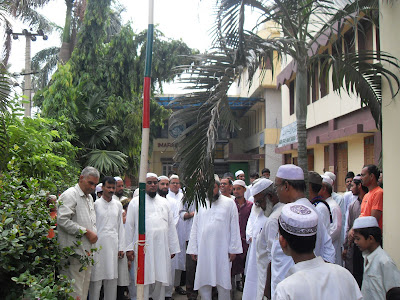
Patna: With the sun rising in the morning of 15th August 2009 in the erstwhile Azeemabad, people came out in the streets to celebrate Independence Day. Besides hoisting flags, they presented different kinds of cultural programs. Like other communities Muslims of the city also celebrated the day with full enthusiasm – they hoisted flags at offices, workshops and religious and educational institutions, and paid homage to freedom fighters.
Muslim teenagers were excitedly marching on the roads towards their educational institutions raising slogans with holding flags.
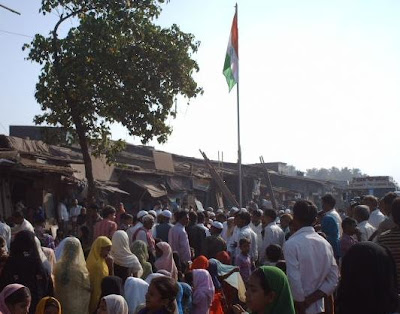
Tiranga being hoisted at Imarat Shariah
“Freedom means that a man can express his view, can act upon his religious obligations and can think freely without any barrier. It is one of the most important bounties of Almighty God which was snatched from us by British government. It was the same day-15th August 1947- when we Indian got that bounty back. We, therefore, celebrate this day as national celebration day” said Maulana Anisur Rahman Qasmi, nazim Imarat Shariah Bihar, Orissa and Jharkhand while talking to TwoCircles.net.
“As Muslims we give especial importance to this day and remember our forefathers who sacrificed for the freedom and we also convey the message to new generations that to protect the freedom and sovereignty of the country is responsibility of every Indian” he added.
Tiranga being hoisted at Al-Ma’had-ul-Aali
Freedom fighter Maulana Saeed Ahmad, who is also na’eb Qazi of Imarat Shariah, hoisted the Tiranga at Imarat Shariah headquarters in Patna.
On the occasion he recalled the British rule: “It was the time when we all Indian had one aim – to throw out the British government from our country. We actively participated in the freedom movement. We visited rural areas to create awareness about freedom struggle. Whenever we went, we went with national flag with making slogans: ‘Hindustan Zindabad, Congress Zindabad and Jamiat Ulema Zindabad’. It was happiest moment when we got freedom from cruelty of British government” he told.
Muslim kids with Tiranga
In another programme, at 8 am a team of Ulema gathered to celebrate Independence Day in the compound of Al-Ma’had-ul-Aali, a centre where ulema are trained in Islamic fiqh. After hoisting the flag they recited the famous poem of Allama Iqbal ‘Sare Jahan se Accha Hindustan Hamara.’
Though students at Al-Ma’had were little in number because of annual vacation but those who were present there actively participated in the ceremony.
Muslim kids with Tiranga
Expressing his view on why we celebrate Independence Day Maulana Badr Ahmad Mujibi, headmaster of Al-Ma’had told TCN, “We celebrate this day as Independence Day as after a long struggle our country got freedom on this day. Our forefathers also took part in freedom struggle and gave matchless contribution to the country.
“Maulana Fazle Haq Kherabadi, Maulana Ismail Shaheed, Mulana Ahmad Shaheed, Maulana Qasim Nanotwi, Maulana Mhmood Hasan Deobandi and Maulana Hussain Ahmad Madni and Maulana Abul Kalam Azad etc. are some names of those who played a vital role in freedom of country” he added.
Muslims in India including religious leaders, journalists, intellectuals, and social activists have on an average responded positively to US President Barack Obama’s Cairo speech to the Muslim World. They hope this will help in bringing peace in the world. Many however, are not happy as he did not regret the killings of millions of people in Iraq and Afghanistan in the US-led war on terror. TwoCircles.net reporters: Mumtaz in New Delhi, Abdul Hameed in Mumbai, Najiya O. in Kochi and Mudassir Rizwan in Patna talked to Muslims to get their views on Obama’s historic speech.
New Delhi
Maulana Abdul Hameed Nomani, Asst. General Secretary, Jamiat Ulema-I-Hind:
The tone and language of the speech of American President Barack Obama and his stress on certain issues are very different from that of his predecessors. His views on various issues have given more hope to people. His support of statehood of Palestine, his promise to withdraw American forces from Iraq by 2012, his announcement that America is ready for unconditional talks with Iran and his promise for education of Muslim students in America – all these things have raised much hope in people.
But it is to be seen how he and his country are going to actualize his statement and how the Muslim World will take them.
Dr Zafarul Islam Khan, President, All India Muslim Majlise Mushawarat:
It’s a good beginning. It’s a marked departure from the policies of former President George W Bush. Though we have some reservations about what he said or what he did not say, still it’s a very good beginning and we would like to see what action follows this nice speech delivered in Cairo which is in a way a central place of Islam.
Some positive points in his speech: he has said there is no war between America and Islam, which is a very good thing. This is going to give a message to certain elements in the American society which has used Bush’s ‘crusade’ to put pressure on Muslims. He has talked about withdrawal of American troops from Iraq. He has also promised that American troops will leave Afghanistan as soon as there is peace.
But I am not very much pleased that he did not say even a word for the victims of America’s war on terror (over a million people killed in Iraq, over 5 million made refugees there). Similar devastations have taken place in Afghanistan. He should have said something on that also. Likewise he did not talk about the uncalled for Israeli aggression over Gaza.
Dr Syed Qasim Rasool Ilyas, Member, Central Advisory Council, Jamaat-e-Islami Hind
It was a clear departure from Mr Bush’s position that whoever is supporting us is with us, otherwise they are with our enemies. It is a good message to the Islamic World. But simultaneously he has tried to do a balancing act. He has defended American position when it comes to Afghanistan. He said America was forced to go to Afghanistan, and that is justification of Bush’s act.
On Palestine issue, though he has supported statehood of Palestine but has not made clear how it is going to be a reality and what role America is going to play for the same.
On nuclear race he has taken a good position. He said he supports nuclear disarmament, and wants to see a world free of nuclear arms.
Navaid Hamid, Secretary, South Asian Council for Minorities:
Fascinating would be right compliment. Fascinating in terms of his clear perception for perusing and safeguarding traditional American interest and opening a window of opportunity and hope for committing to share America's emerging avenues of co-operation with Muslims of the world. His clear message to Muslim was Americans’ non-negotiable relations with Israel with assurance of a separate state for Palestine.
The second important message he has conveyed is non-negotiable stand of American led powers on Iranians nuclear issue. In one line he created bottom line for American stand as far as Israel and Iranian nuclear issue is concerned.
If he really has priorities for democratisation of Isalmic societies, Muslims need to understand whether American establishment has made up its mind for emergence of forces against American allies in Egypt, Gulf, and in Central Asia.
It seems as he was addressing the tyrants of the Muslim countries when he spoke about democratisation of societies, empowerment of women, rights of minorities. No Muslim can individually do anything for all these three issues until rulers of the Muslim nations allow their participation, which seems to be near to impossible in near future.
Shaghil Bilali, journalist (Mail Today):
I think this is a very positive speech by an American president after a long time. He spoke wholeheartedly about the solution of isolation between the US and Islam. He also went on to praising Muslims’ inventions and their contribution to the world civilization.
Obama said, “It was Islam at places like Al-Azhar that carried the light of learning through so many centuries, paving the way for Europe's renaissance and enlightenment.”
He added, “And throughout history, Islam has demonstrated through words and deeds the possibilities of religious tolerance and racial equality.”
Considering the importance of this speech and time, Muslim world should respect his words without smelling any conspiracy theory. But at the same time, Obama should make sure that these do not remain just personal feelings of the US president and also not a mere masterpiece work of a literary artist. But, these are the words of whole US administration and they will execute their sayings considerably.
Secondly, when US is talking to maintain warm relationships with the Muslim nations, they should be very careful in their works, e.g. their peace missions in countries like Afghanistan and Iraq. US should make sure that their actions will only be restricted to the welfare of those countries and there should not be the incidents where ‘hundreds of Afghan people lost their lives because US military forces made errors in carrying out airstrikes in Afghanistan’. On other hand, Muslim nations should also work on to curb those extremist forces within their communities, which are irrationally misguiding Muslims after spreading hatred against US. They should make sure that if one side of world is extending hand of friendship they should be equally cordial to receive it. We will only get the solution of isolation only when both sides are seriously working about it.
Mumbai
The speech of Obama to the Islamic World overall has been welcomed by the Muslim leaders in Maharashtra. Muslims here have high expectations from him.
‘The approach of Obama towards the Islamic world, as expressed in his speech, is a good omen as regards the relations between the Islamic world and the West especially America. We welcome it. His attitude, contrary to former US presidents, towards the Islamic world should be adulated. Bush even has said that America was fighting a ‘Saleebi Jang’ (crusade). Bush has done bloodshed and torture on Muslims in the disguise of establishing peace but we hope that Obama will not step into his feet. We pray that the lobby prepared by Clinton and Bush let him work for the good cause.’
Maulana Sayyid Athar Ali, President, All India Ulama Association:
‘Overall, we welcome the speech of Obama. He is the first person to have spoken frankly about Islam, Muslims and terrorism. We are happy that he has set a deadline of 2012 to remove his army from Iraq. As a matter of fact the existence of both the Israel and Palestine are a reality. None of them can be removed. We should work out a solution to the issue geographically. The approach of Obama, as evident from his speech, in this regard is good. We also welcome his statement that the Christians and the Muslims should work together because it is exactly as per the teachings of the religion. However, we are disappointed that he did say nothing about the innocent killings in Afghanistan and Iraq. Had he said something (regretted on) about those killings it would had sent a better message. Only a speech cannot console those who lost their dearest and nearest ones in the battles. In words he said nothing rigid about Iran (but he gave indirect warning to it regarding nuclear weapons). He should have given the same (indirect) warning to North Korea too.’
Kochi
Sadiqali Shihab Thangal, Former State President, Muslim Youth League:
The speech of US President Barak Obama seems very hopeful. It is a matter of great relief that the American President is trying to understand Islam. The Muslim world is happy that the American President has an unambiguous knowledge of Islam when the global media spreads misconceptions about Islam. This speech is supposed to influence the future policies of the US government towards the Muslim world. The former governments in the country followed a hardcore pro-Jewish attitude. However, Obama has come forward to acknowledge the existence of Palestine. This change in the policies followed by the US is indeed welcome.
O. Abdulla, Veteran journalist:
President Barak Husain Obama’s Cairo speech includes all the ingredients for the Jew-Zionist lobby to call him Maulana Obama. Extreme confidence is not good in any matter. But at the same time, it is not right to approach everything from an angle of disappointment. I don’t think that anybody else in his place could have said more than what Obama has said in Cairo. As he said, change will not come by a single speech. But, what he did not care for in his speech was that the problems between the Muslim world and the US did not begin by 9/11. Obama’s foreign policy does not go side by side with his speech. The relevance of the speech lies in how well he can put it into practice, overpowering the plots of the Jewish lobby and the Zionists.
A.P. Abdul Qader Moulavi, Secretary, Kerala Nadvathul Mujahideen:
We welcome Barak Obama’s speech. It is for the good of all that a peaceful situation prevails in West Asia. Obama’s speech and approach show a good sign. However, let us wait and see what happens.
E.M. Abdurahman, Popular Front of India:
Barak Obama is the head of a system. We will have to wait and see if the change in the voice of the head will reflect in the system. The change in the voice need not essentially be a change in the policy. But we hope it marks a change in the policy towards the Muslim world.
It is welcome that Obama has decided to withdraw the forces from Iraq. But at the same time he has also said that the epicenter of terrorism has shifted to Afghanisthan. So, it is only a shift of forces from Iraq to Afghan. This shows that America is still not ready to leave the Muslim world decide its own fate.
America should recognize that it is only one among the 200+ nations in the world. It should acknowledge that it is neither superior nor inferior to any other country. This aspect should be applicable in all matters including the nuclear issue. Iran too has the right to develop and utilize nuclear energy for its own needs. America should work cordially with all nations of the world. But, Obama has mentioned nothing in this regard in his speech. Unless such a message comes, we can’t hope for a major change in the US policy. However, let us hope that the welcome change of voice will reflect in the policies too.
Dr. Hussain Madavoor, General Secretary, Indian Islahi Movement
As his first speech in the Middle East, Obama’s speech in Cairo creates a lot of hope. Obama became a totally different American President by advocating a Palestinian State. He said that a Palestine state should be there along with the State of Israel. Obama also talked about Islam. He said that Islam is not about terrorism, but rather peace. What is important is that he has said so. What comes in practice can only be known later. It has been more than 100 days since Obama took office as the President of America. All this time in office, he had not mentioned about his Muslim background. But in Cairo, he spoke of his background also. All these show a positive sign and let us welcome it.
Dr.Hussain Madavoor
Kanthapuram A.P. Aboobacker Musliyar, Samastha Kerala Jam’iyyathul Ulema (A.P. faction)
US President Barak Obama’s speech in Cairo was historic and providing a lot of hopes to the world, especially the Islamic world. The former President George W. Bush spoke of waging a Crusade after 9/11. But, Obama has spoken about peace, like none of the former Presidents. Obama expressed his readiness for unconditional talks with Iran, retaining the friends in the Middle East. This shows that he looks forward to good relations. This is a clear change from the policy of George Bush that considered Iran as one among the axis of evil.
Kanthapuram AP Aboobakker Musliyar
Further, Obama has said that Israel should stop its settlements in the Palestinian areas. He has emphasized on the two-nation theory and asked to follow the Road Map. This is very relevant in the present circumstances when the misery of Palestine is not acknowledged as misery by the western media, when Israel is not ready even for UN discussions on the issue. The State of Israel is a reality. The Hamas and Palestinians should admit it.
Anybody can speak. But what is important is the transformation of words into action. Obama’s sincerity in his speech can be understood only by further action on his words.
O. Abdurahman, editor, 'Madhyamam' daily
When he was elected the President of the United States, Barak Obama said he had come with change. And that is what he repeated in the speeches afterwards. He always said that he would change US relations with the Muslim world. The visit to the Middle East and the speech in Cairo were a part of the change.
O.Abdurahman
The economic meltdown and the war in Iraq have affected the US very badly. The help and cooperation of the Muslim countries is very essential for it to come out of this grave crisis. So, Obama seriously wants to better relations. He said that the US does not plan to stay forever in Afghanisthan or to make the country a military base. He added that the US forces will completely be withdrawn from Iraq in 2012. Furthermore, the President expressed his wish to have good relations with Iran. But the basis for all problems with the Muslim world is the Palestine issue. Obama advocates a two-nation theory in the matter. Israel does not agree to this. Still, Obama’s repeated declaration of the two-nation formula can be seen as a way to force out Israeli support.
The Jewish-Israeli lobby is sure to vehemently oppose this. If that opposition is not overpowered, the speech will remain as a mere speech.
M.I. Thangal, editor, 'Chandrika' daily
Obama’s speech shows a voice of reconciliation. His mention of Iran and Palestine makes one think that he wishes for a change. He has used an entirely different tone from that of his predecessors.
Chennai
A. Faizur Rahman, construction engineer and peace activist:
“An amazing speech. But Obama was not fair in seeking a commitment to non-violence from the Palestinians alone. This was perhaps the only glaring omission in his speech. He talked about the violent acts of Hamas but refused to condemn Israel for its Gaza offensive which killed more than 1500 innocent Palestinians including children. Obama is willing to strike the Israelis but afraid to wound.”
A. Faizur Rahman made this statement in the US Consulate in Chennai where he was one of the few special invitees to witness the Obama speech live.
"But all of us must recognize that education and innovation will be the currency of the 21st century, and in too many Muslim communities there remains underinvestment in these areas. I am emphasizing such investments within my country." I think Muslims must focus on this statement of Obama.
Patna
Maulana Anisur Rahman Quasmi, General Secretary, Imarat Shariah, Bihar
His speech is very good. But America has committed sin by killing innocents. If Obama regrets for those killings, it will be good. America should compensate for the killings and destructions in Iraq and Afghanistan.
Patna: Overwhelmed with the accolades flowing in from across the country for the remarkable success of the Rahmani-30 coaching centre in IIT-JEE, its patron and Sajjada Nashin, Khanqah Rahmani of Munger, Maulana Syed Mohammad Wali Rahmani has urged the community leadership to emulate and expand the experience of Rahmani-30.
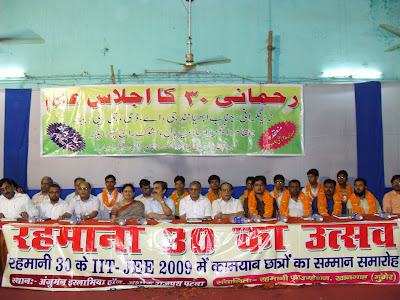
Addressing a program held at Anjuman Islamia Hall in Patna yesterday to felicitate Rahmani-30’s successful IIT-JEE students, teachers and administration, Maulana Rahmani, patron of Rahmani Foundation that runs the coaching centre opened last year for poor but talented Muslim students aspiring for IIT-JEE, emphasized on opening similar institutions to train Muslim youths for medical and journalism.
Urging the audience, particularly pointing to S M Ashraf Farid, chief editor of Bihar’s leading Urdu daily Qaumi Tanzeem, and Ahmad Ashfaque Kareem, the founder of Katihar Medical College, who were sitting in the hall, Maulana Rahmani said people should come forward to serve the community using their abilities and means that they own. “Mr. Farid should open a centre to train community’s youths in journalism and Mr, Ashfaque should manage coaching for Muslim youths for medical,” he said.
The first batch of Rahmani-30 comprising 10 students had appeared for the all India IIT-JEE, and all of them cleared the test. Since the results were declared on May 25, the telephone of Maulana Rahmani has not stopped ringing. He has received appreciation from as far as Kerala and Maharashtra.
“Within these two days I have received proposal from Maharashtra, Kolkata, Jamshedpur and Kerala etc. to establish centers there and got congratulation not only from the state but also from all over the country” said Maulana Rahmani.
While appreciating the contribution of administration of Rahmani-30, Maulana said: “The community salutes Mr. Abhiyanad and his team for their selfless services, this is a big reward for them because there are many people who are more experts than these teachers and they are earning money but not honors as these teachers got” he stated. Abhiyanad, ADGP (Bihar Military Police), is the founder of Super-30. Last year at the request of Maulana Rahmani he agreed to render his services for Rahmani-30.
Addressing the successful candidates Mr. Ashfaque Kareem said: “It is the beginning, you will have to continue your efforts and go far ahead then surly some of you will be A.P.J Abdul Kalam.” Though I am founder of Katihar Medical College but I feel envy of this great service and I wish I could do that” he added.
Shafeeqe Mashadi of Millat Education Society which provided the building to Rahmani-30, said: “When you complete your course you must remember your past and try to do for others as your teachers did for you.” He also announced a cash reward of Rs 5,000 for each student on behalf of the Millat Education Society.
Some teachers of Rahmani-30 also shared their experience with the audience
“In previous years when results of IIT-JEE came I found some Muslim students from Bihar in the list after much search. But this time when results came out my happiness knew no bounds when I saw the names of all 10 students of Rahmani-30 on front page of national newspaper Indian Express” said Mr. Shakir, one of the teachers of Rahmani-30.
Mathematics teacher of Rahmani-30 Mr. Javed Ahmad while expressing his feeling said: “Instead of blaming for partiality our youths should concentrate on study then surely they will get success.” “The work started by Maulana Rahmani under the guidance of Abhiyanad ji is going in right direction. That’s why the coaching centre got 100% results. Here I did not only teach the students but also learnt how to motivate students.”
The program was attended by prominent personalities, dignitaries, intellectuals as well as common citizens.
New Delhi: While political parties are religiously concentrated on forging alliances and making new friends to grab Dillik ki Satta (central government) the Muslims, as the largest religious minority, feel detached thinking nothing will change for the community whoever comes to power. However, they have some genuine demands, both at local and national level, from the coming new government.
Muslims demand inclusion of the community in the reservation categories. They want more representation in legislatures, from Parliament to Panchayat. But what they urgently want from the new central government is the end of victimization of the community in the name of war against terror. Locally, they cry for proper civic amenities in Muslim dominated areas and a program for their development. But they are not much hopeful.
Ask about their expectations from the coming government at the centre, they will say: whoever comes to power, none is going to work for the welfare of the Muslim community. No political party is thinking honestly for the development of the community. They are using it just as a vote bank.
This is the general feeling of Muslims in any city.
A Jama Masjid area resident in Delhi says: No government works for the Muslim community. We have got fed up. In this Jama Masjid area there are several colonies which have no hospital and no marriage hall. No party, whether it is Congress or other, is sincere about the community. They just exploit the community for their own benefits. They treat us as vote bank.
Another one is more critical of the Congress for its apathy towards Muslim community since Independence: “The Congress has not done anything for the Muslim community. Since 1947 the party never fielded a Muslim candidate in Delhi. Congress is an open enemy of the Muslim community. Since Independence the party did nothing for the community. Muslims are being treated as a vote bank.” He demands more representation in legislature and “the government should stop the victimization of Muslim community in the name of terrorism.”
There are many in Delhi who want that Muslims should be given their rights. They should be given reservation. The government should sincerely work for the economic development of the community.
Like many in Delhi a Patna Muslim also does not pin much hope on the government. He says: whoever comes to power, none is going to work for the welfare of the Muslim community. Like in other parts of the world Muslims are being humiliated in India also. In the name of terrorism the community is being victimized. No political party is thinking honestly for the development of the community. They are using it just as a vote bank.
(Manzar Bilal and Mudassir Rizwan in Patna, Mumtaz Alam Falahi in Delhi)
By Manzar Bilal and Mudassir Rizwan, TwoCircles.net,
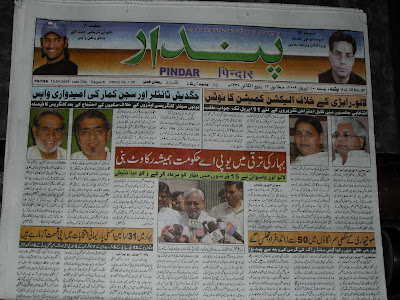
To solve problems facing Urdu Language in Bihar pressure groups should emerge once again like the ones that ensured it second official language status in the state, says Rehan Ghani, Managing Editor, Pindar, one of the oldest Urdu dailies in Bihar. Concerned with the Urdu speakers’ apathy towards the language, Ghani, also Associate Editor, Door Darshan, Patna, holds Urduwalas more responsible than the government for the sordid state of the language.
What are the difficulties and challenges before Urdu language in the country especially in Bihar?
Urdu language faces lots of difficulties and challenges from two sides: from the government and from the speakers of the language. Today a big problem is that we (Urdu speakers) have thrown out Urdu from our houses. Though we organize seminars and mushayera in metro cities we are not giving attention to the basic education of Urdu language. So, when the basic education of the language will stop then needless to say about its higher education.
There is a need for Urdu speakers to be aware of the problems and interests of the language. And they should think to solve its problems and protect its interests.
As for the difficulties from the government side, we cannot blame the government much because all the governments take decision when they are pressurized. For example, in Bihar Urdu is second official language but it got the status after much sacrifice of the community. Our forefathers sacrificed for it, they made a pressure group and put the demands before the government and also they made it an election issue until the government believed that Urdu speaking people became awake and if their demands were not fulfilled, the government would bear the political losses. Only then it accepted their demand and Urdu became second official language.
Today though Urdu language is facing problems from government but most of the problems are from our own side because we are not serious to solve the problems. Once again there is a need to make a pressure group only then the problems of the language will be solved both in Bihar and in the country. Therefore, I think that Urdu speakers and Urdu newspapers are themselves responsible for all the problems of Urdu.
What should be done to solve the problems?
The proprietors and editors of Urdu newspapers and well-wishers of the language from mainstream sections should sit together to point out the problems and see which problems we can solve and which ones can be solved by government. Then we should make a pressure group which would put pressure on government time to time. Actually most of the problems do not reach the government. Therefore, there is a need of a group which would make government aware about the problems of Urdu and also suggest the government ways to solve them.
Is it true that Urdu newspapers publish old news?
It is not true at all. Maybe this was happening 20 years back but in this age of internet, information and technology it is totally wrong to say that Urdu newspapers publish old news because today Urdu newspapers are as much updated as English and Hindi newspapers.
What is the circulation of Pindar?
(Smiling) when any one asks me about circulation of newspaper, I reply: do not ask any man about his salary and any woman about her age because they will never say truth about that. Similar is the case with newspapers. I am not proprietor therefore I cannot give you exact numbers. Yes, Pindar is in circulation and people of different parts of Bihar like it.
When did you join Pindar?
I joined ‘Pindar’ as Editor in 2004 when its proprietor decided to revive it. It is one of the oldest Urdu newspapers in Bihar but it was not in circulation for long. Soon after joining it I took several steps for its development. It is progressing day by day and now it is available in all parts of Bihar.
How will you assess the progress of Pindar in the last five years under your editorship?
Pindar progressed in terms of colour as well as number of pages. Earlier it was published in black and white and had 6 pages but now it is being published colours with 8 pages. Therefore people like it and its circulation is increasing day by day. But as a whole number of Urdu readers is decreasing which is the matter of concern for Urdu speaking people. The efforts which should be done to create awareness among people towards Urdu and Urdu newspapers are not going on so far. English or Hindi newspapers are using lots of means to attract people but Urdu newspapers are far behind in this regard.
What should be done for that?
Firstly, Urdu newspapers should increase their pages because English and Hindi newspapers have 20-28 pages but Urdu newspapers have hardly 6-12 pages which also contain advertisement then obviously we carry less material. Secondly, there should be columns for different topics. For example, the news from different parts of the country should be published separately. Similarly news about youths, women, job and economy should also be given specific spaces. Though I work with Pindar but in this regard I appreciate Roznama Rashtriya Sahara because it understood the need of the time. Therefore, it has more pages and every page for different issues. It carries news of almost all parts of Bihar. It brought out a revolution in the state Urdu journalism which created a competitive environment among the Urdu newspapers that surely benefited Urdu and Urdu journalism.
Did Roznama Rashtriya Sahara affect the readership of Pindar?
No. As a whole it did not affect Pindar because it has its own readers. It means that Pindar has been trying to build a good society because being Muslims we have some responsibilities about our religion and society. Therefore we do not carry nude pictures. We concentrate on carrying articles which may help to reform the society. We do not highlight the news of crimes and any such thing which may send a wrong message to the society because we believe that newspaper is one of the means to build good society and we will be asked about that. Because of these qualities Pindar has hold its place among a section of people.
How does government help Urdu newspapers?
In Bihar government helps Urdu newspapers more than in any other state. All those Urdu newspapers that are recognized by state government receive government advertisements and nowadays it is more compared to past. But on the other hand it is tragedy for Urdu journalism in Bihar that its working journalists are living miserable life.
Who can play an important role to solve the problems of Urdu newspapers?
The roles of government, proprietors, wealthy people and common readers of Urdu newspapers are required to solve the problems of Urdu newspapers and problems will not be solved unless all of them perform their roles sincerely. I want to explain here one thing that in Bihar proprietors of the newspapers are generally editors also, it does not matter that he is journalist or not. But a daily newspaper named ‘Inqilab-e-Jadeed, published from Patna, changed this tradition and its owner appointed a working journalist as its editor. Following this step Pindar also did the same. Its owner honoured me by appointing me as chief editor of the daily but because of a controversial write-up of mine I was dismissed from that post. Currently I am managing editor of the daily.
Is the new generation going away from Urdu language?
Yes, the new generation is turning away from the language. But they are not responsible for that; rather we parents are responsible for this because we are getting materialistic and have forgot our responsibilities about our language, our culture and our identity. Of course, we should make efforts for our necessities but should also be careful about our culture and identity.
What is your message for Urdu speaking people?
I request youths that as they are learning science and technology etc. they should spend at least one hour out of 24 hours to learn their mother language because it is their responsibility to protect it and make all efforts for its development and if they will not understand this language, then how they can fight for its right? Therefore, they should try to understand the problems of Urdu because people who are fighting for the betterment of Urdu today they will not be in future and new generation will have to counter these problems. Parents should also teach their children Urdu and keep Urdu books and newspapers in their houses. Unfortunately today there are many houses of Urdu speaking people where Hindi and English newspapers are available but not Urdu newspaper. People should understand the fact that Urdu language is essential to protect our Islamic culture and identity and if Urdu language disappears we will lose our civilization and identity.
(About the interviewee (editor): Rehan Ghani started his journalism career with Urdu daily Sangam’ published from Patna under the editorship of late Ghulam Sarvar, ex-minister of Bihar. He also worked with ‘Qaumi Awaz’ another daily from Patna. Then he was appointed as Urdu translator in the state department of Rajbhasha and worked there for only two years as he felt that though he was appointed as Urdu translator he was working as a clerk and nothing related to Urdu language. He resigned and came back to Qaumi Awaz. He spent around six months with ‘Urdu Samachar’ in Nagpur. Then he joined Door Darshan, Patna, as associate editor and is continuing till date. He joined Pindar as editor in 2004.)
By Manzar Bilal and Mudassir Rizwan, TwoCircles.net,
We do not hope anything from political parties for it is useless. Yes, we will vote for a party which assures to provide adequate security to the Muslim community from organized violence. Given the scenario of the country it will be better for us to vote for UPA at least to keep L K Advani away from being prime minister of India” says Muhammad Saleem, a fruit seller in Patna.
His views are shared by most of those Patnaites TwoCircles.net talked to. Security and keeping communal forces out of power are major concerns for people in this backward state where civic amenities are rare. Given the history of the Congress, a section is considering alternative. However, many are fed up with political parties, and hence have lost interest in elections.
Muhammad Saleem, a fruit seller in Patna
When TCN team in Patna met Muslims from different classes to know their opinions they found them angry with political parties because all of them have always exploited and cheated the community. They also criticized Muslim leaders who just serve their own purposes and do not dare to raise voice in Parliament and assemblies against cruelty on Muslims.
“We are not happy with any political party because all have been befooling us since Independence. No one is going to solve our problems until we ourselves stand to do so. Once our ratio in government sector was 14 percent and now it is less than 2 percent” said Qamar Rizwi, a businessman in Patna city. He further said: “I am not able to decide as to which party I should vote as all parties are sailing in the same boat”.
Qamar Rizwi, a businessman in Patna
50-year-old Hafiz Mazaherul Haq is so much upset with political parties that he is not interested to vote. He does not remember when he voted last. “I do not vote for any party because they are not serious about our problems and I do not see any alternative for which I should vote” he added.
Though Muslims are disappointed with all the parties including Congress but because they do not see any suitable alternative so some of them have soft corner for UPA alliance compared to NDA. They are going to vote only on the basis of security matter and to keep BJP out of power.
“This is a parliamentary election so we should vote for the party keeping an eye on national and international issues” said Mr. Fazluddin, owner of a cloth shop, adding that the present government led by UPA alliance has done better works at national and international level than NDA alliance. “Though the Sachar Committee report remains to be implemented but this government implemented many schemes for the minority communities compared to the previous one” he said.
Mr. Fazluddin, owner of a cloth shop in Patna
Muhammad Mahmood, a poor worker from Sitamarhi district working in Patna, expressed his anguish saying that besides giving every kind of sacrifice Muslims are discriminated in every aspect of life in the country. Asked which party he is going to vote for he said: “I will vote for the party which will provide security to Muslims and manage peaceful environment in the country because whenever violence erupts we become jobless” said Md. Mahmood.
Muhammad Saleem, a fruit seller in Sabzi Bagh, Patna, felt sorry to say that even Muslim leaders are not sincere to solve the problems faced by Muslims, let alone the politicians from other community. “We do not hope anything from political parties for it is useless. Yes, we will vote for a party which will give assurances that they will provide adequate security to the Muslim community from organized violence” he said adding, “Seeing the scenario of the country it will be better for us to vote for UPA alliance at least to keep L K Advani away from being prime minister of India” said Saleem.
“We want to live peacefully along with other communities in the country, and during this government led by UPA we did not see any pre-planned riot such as Gujrat riot so we will give vote in favour of UPA alliance” said 60-year-old vendor Muhammad Moheet. “Government should initiate to tackle poverty that we are facing today” he added.
Muhammad Moheet, vendor in Patna
As Muslims have bitter experience with Congress and BJP some of them want to do new experience and give chance to any new alliance.
Muhammad Asrar, a social activist, blamed all political parties that came to power after Independence for pushing Muslim community towards educational, social and financial backwardness by their double-standard policies. “Both Congress and BJP have always pained us. If Congress is a secular party so why it did not implement the Sachar Committee report and Sri Krishna Commission report and why Babri Masjid case is still stuck in court” he said. He also said that many welfare schemes were announced by government but how many Muslims have benefited is not known. “We will vote for non-UPA and non-BJP alliance so we can test them also” said Asrar.
“We want to change the government so that no party can take us as for granted and then neglect our problems and exploit us as happened in the past” said Dr. Ataur Rahman. He also advised Muslim leaders to learn lessons from the leaders of other communities who do not hesitate to go any extent for the benefit of their communities.
Patna: Saran Division Commissioner Ashok Kumar Chauhan while talking to twocircles.net said:"Members from both the sides are taking round of the area to take locals in confidence. Situation is completely under control and no untoward incidence has been reported so far since the past few hours. We have taken all the precautionary measures to avoid recurrence of any unfortunate incident".
It is to be recalled that around yesterday afternoon tension broke out between the members of two communities in the Pathanpatti area of Gopalganj district in Bihar, which falls under Barawli police station.
Tension escalated when members of a particular community decided to follow through the route of Pathanpati area, along with the procession, led by a strong mob, for the purpose of idol immersion on the occasion of Saraswati puja.
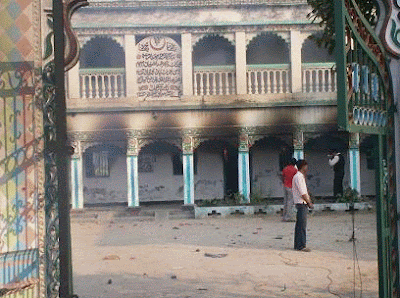
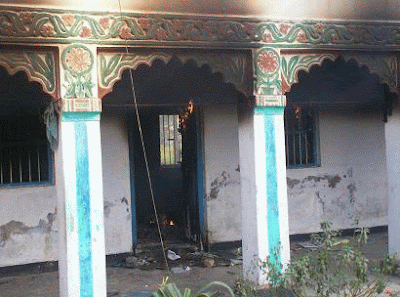
Madrasa Insaful Uloom was put on fire but all the students were able to make safe exit.
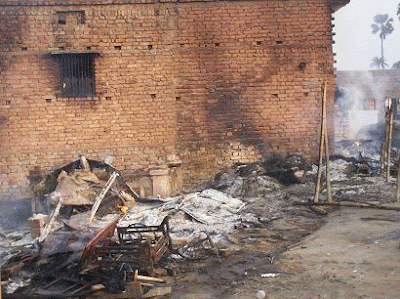
Patna: A madrasa called Insaful Uloom and some houses of Muslims were put on fire today in Pathan Patti area of Barauli Police Station in Bihar’s Gopalganj district allegedly by a mob of thousands of processionists who were taking idols for immersion through a route never used for that purpose.
Eyewitness talks to TwoCircles.net:
In the ensuing clash between the two communities some people including some policemen have reportedly sustained injuries. A police sub-inspector is reported to have died of heart attack immediately after the incident.
Locals told TwoCircles.net that the idols of Hindu deity Saraswati was immersed some days back but people from five villages did not immerse their idols and were adamant to take them through the Muslim area which was never used for immersion procession. On that route fall a mosque and Madrasa Insaful Uloom. Village head had already written to authorities that the route should not be used. However, they remained adamant.
Today around 1 pm a mob of more than 10 thousand processionists from the five villages gathered at a place and proceeded with the idols to the route which was prohibited. The administration was aware of the situation as the news about growing tension in the area was coming in the local media for some days. But they did not do enough to keep the anti-social elements from executing their plan. Today the police force was deployed in the area. Yet, as soon as the mob reached Muslim area, they attacked the madrasa and put it on fire. They also put on fire some huts of Muslims, which followed stone pelting from the two sides and some people including policemen were injured. Some students of the madrasa were also injured while their belongings were burnt.
To control the situation security forces have been called in from neighboring districts of Muzaffarpur and Motihari. Senior police officers are camping in the area.
The area falls in Barauli Vidhan Sabha constituency which is currently represented by BJP MLA Ram Parvesh Singh, who is also state tourism minister. People say what happened today was well planned and executed keeping in view the coming Lok Sabha elections.
Patna: As per the initial report available tension broke out in the Barawli area of Gopalganj district in Bihar when people from majority community were crossing the Pathanpatti area for the purpose of idol immersion on the occasion of Saraswati Puja.
Two groups from both communities clashed in the area which led to the injury of few people and a police inspector.
As per the sources the furious crowd has attacked some madrasas in the Pathanpatti area, which has led to the worsening of the situation.
Situation is still tense but under control.
District Magistrate, superintendent of Police and other admistration officials have reached the spot to take stock of the situation.
By Abdul Hameed and Mudassir Rizwan, TwoCircles.net,
Belying a perception that madrasas generally show little interest in national festivals like Independence Day and Republic Day, several Islamic seminaries in Mumbai and Patna and many others across the country, along with the nation, celebrated the Yaum-e-Jamhuriya (Republic Day) today with enthusiasm.
Following the national tradition madrasa teachers and students gathered under the National Flag – Tiranga – hoisted it and sang the National Anthem and National Song with teachers reminding their pupils about the importance of the day and that they should be a faithful citizen of the country.
The whole Mumbai today celebrated the 60th Republic Day with joy and fervor and programs were organized at schools, colleges, and madrasas and even on the pavements.
Madrasa Rahmania in Govandi celebrated the Republic Day with the same spirit. Located in the Muslim-dominated area the madrasa has been conducting programs and hoisting flags on 15 August and 26 January for nearly 8 years and it attracts many people from its vicinity too.
The students of the madrasa presented their programs on the occasion that included the National Anthem and National Song (Sare Jahan se achchha Hindustan hamara) followed by speeches by the students focusing on the Muslims' contribution towards freedom of the country.
“Some years back our madrasa would not hoist the flag but at the suggestion of a municipal officer we have been doing so for the last eight years,” Maulana Jalaluddin, secretary of the madrasa, told TwoCircles.net.
“We hold programs on Independence Day and Republic Day to express our solidarity with the whole India and through this we tell the people about what our forefathers sacrificed for the sake of the country,” said the Maulana.
With same national spirit several madrasas in Bihar including Al-Mahadul Aali, a madrasa run in Patna by the Imarat Sharia (Bihar, Orissa & Jharkhand), celebrated the Republic Day.
Located in a densely populated Muslim locality of Phulwari Shareef in Bihar’s capital madrasa Al-Mahadul Aali celebrated the 60th Republic Day with full national spirit.
After hoisting the Tiranga Maulana Abdul Basit, secretary of the madrasa, told the students about the responsibility of a good citizen. He emphasized communal harmony and brotherhood among the people of the country. Quoting Allama Iqbal’s couplet "Ai Aabrood Ganga Woh Din Hai Yaad Tujhko, Utra Tere Kinare Jab Kaarwan Hamara" Maulana Abdul Basit told his students that they should not forget the purpose of the caravan of their forefathers that came here. He said: We should live here peacefully and maintain good relationship with our countrymen. We must not do anything that hurts others.
While talking to some madrasa students it was noticed that like their counterparts of modern schools the new generation of madrasas know a little about Independence Day and Republic Day and some of them are confused about the history of these two days.
Waheedur Rahman and Muhammad Ajmal, Class VI students of Madrasa Rahmania say: We celebrate 26 January as Republic Day every year because the Constitution of India came into force on the very day in 1950. Correct. But Muhammad Zahid of the same class is a little confused when he says today is Independence Day and 15 August is Republic Day. Similarly Abdul Haseeb of Class IV says 26 January is Yaum-e-Jamhuriya (Republic Day) and we are celebrating the day since 1946 while Ubaidullah who did his SSC says we have been celebrating Republic Day since 1947 or 1957.
New Delhi: It has been 16 years since Babri Masjid was demolished on the basis of a plotted controversy by Hindu extremists and then communal riots erupted almost throughout the country. TwoCircles.net tried to know what Muslims in Delhi, Mumbai and Patna think about the issue today and how it has affected the community.
Our teams in the three cities talked to teenagers, youths and people who are in the 30s and found that Mumbai Muslims are more sensitive to and more aware of Babri Masjid demolition issue than Muslims in Delhi and Patna. Unlike teenagers in Mumbai, those in the same age group in Delhi and Patna are not or little aware of the issue. Similarly, 50% of youths we talked in Delhi want to forget the issue and move ahead. Some want to give more focus on recent issues like Gujarat pogrom and serial blasts in Delhi and Mumbai. But youths in Mumbai are more sensitive. The reason lies in the history. Post-demolition, Mumbai was worst affected by consequent communal riots compared to Delhi and Patna.
Delhi
Naqueeb Ahmad, network engineer, age 24: As far as the demolition is concerned it took place 16 years back when I was just 8 an then I had no idea what happened. Now I am 24 and in all these 16 years some Islamist extremists and fundamentalists have been trying every year to provoke and keep the issue alive. We should forget it as this will always harm the communal harmony and relationship between Hindus and Muslims and always increase hatred among the communities.
Nadeem Ahmad: general store owner, age 35: The demolition affected us but now there are more big issues. It is no more an issue to talk about. Why don’t you talk about Gujarat genocide and serial blasts in Delhi and Mumbai? However, he admits that the Muslims will never forget Babri issue the generations will remember it until justice is done.
Nadeem Alam Khan, computer professional, age 35: Muslims should remember December 6 because on this day in 1992 Babri Masjid was demolished. That was a horrific incident which shook the entire community. It was a first case of its kind that a mosque was demolished in such way. We are sad and feel helpless that we could not protect the mosque.
What could be the peaceful solution?
Muslims and Hindus should sit together and find out any solution that could not harm the communal harmony.
Mohammad Jawed, activist, age 30: What happened on December 6, 1992 in Ayodhya can never be forgotten. The demolition was an attack on our democracy – an event that never happened in the history. I lost faith in democracy as the mosque was attacked in the full presence of security forces and governments. Muslims can never forget the tragedy.
A class XII student of Jamia Millia Islamia, age 17: The Babri issue is totally political and I don’t want to discuss it. (He, however, does not know the exact date when the mosque was demolished. He said it was demolished on December 2 or 3 or 4 or 5 in 1992)
Waqar Ahmad, class IX student of Jamia Millia Islamia, age 15: Until two years back I did not know about the issue because it was never talked about in the family or my village in Mahua in Vaishali district of Bihar. When I came here I knew about through friends.
Mumbai
It is really pleasing to note that the Muslim teenagers have great interest in the history of their community. When TwoCircles.net talked to two of them they both turned out to be well aware of December 6, 1992 incident. They told that December 6 is a 'black day' for the community.
Siddiqi Akhtar Husain Mazhar Husain, class X, age 16: It is a day of sorrow and sadness. Muslims should take a lesson from the incident. They should try to prevent such tragedies from taking place again.
He told that Babri Masjid was demolished on December 6, 1992.
Wajhul Qamar, student of Madani High School, age 15: December 6 is known as 'black day'. It has great importance.'
Being asked when Babri Masjid was demolished he told: Actually it was demolished on December 5 because the riots in Mumbai had erupted on 6th December and it is fact that they took place after the demolition of the Masjid.'
Maulana Rizwan Ahmad Qasmi, 30, was a student of Almiyah in Imdadia Madrasa when the riots in Mumbai erupted after demolition of Babri Masjid. Though he did not point out to anything the effect of which he still feels yet he said:
'We were affected badly. For many days we could not study. Our Madrasa was also attacked by police. They entered the madrasa and killed the teachers and injured students.' Those who lost their dearest and nearest ones during the riots caused by the demolition can never forget the incident. The subsequent incidents which still go on taking place remind people of the incident in which they lost their relatives and friends.'
Haroon Mozawala, general secretary Khair-e-Ummat Trust: At the time Babri Masjid was demolished the structure of democracy was collapsed amidst the slogans of communalism. Even though it had come as a blow to the glory of the country, it is also harmful for the Muslims; for whatever the country faces from, the Muslims are automatically affected by that.
That Muslims had to be jailed and their economy somehow weakened, was a result of their emotional reaction. Had they shown some patience they would have been averted from those losses.
The place where once a mosque is built becomes specific to the mosque. Yet we are ready to accept whatever decision the court issues. In the matter if the court decides on the basis of the solid evidences that the land is that of a temple then we will accept it. This is the opinion of almost all the Muslims.
Patna
Mobbashir Hassan, class 5th student of St. Michael, age (13): I don’t know at all if something really very important happened on December 6. He said no one at his school or home talked about the day.
Imran, class VIII, Al- Hira Public High School, age 15: I don’t know what exactly happened on the day.
When reminded of an incident in which Babri Masjid was demolished on the day in 1992, he said he has heard of the tragedy in his home and school but didn’t know the exact date and year on which it happened.
(Mumtaz Alam Falahi in Delhi, Abdul Hameed in Mumbai and Md. Ali in Patna)
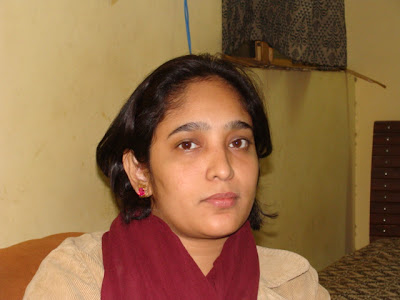
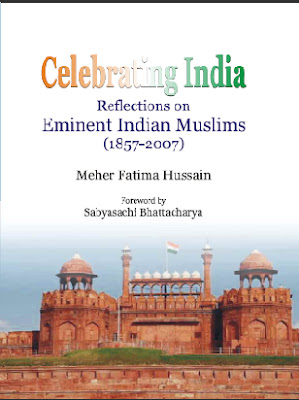
The book Celebrating India: Reflections on Eminent Indian Muslims (1857-2007) provides biographical profiles of 150 patriotic Indian Muslims, many of them unsung heroes – those who did not become party to the two-nation theory. Author Meher Fatima Hussain, Lecturer at Jamia Millia Islamia, talks to Mumtaz Alam Falahi of TwoCircles.net on her book.
What inspired you to write this book?
India is celebrating centenaries of 150 years of its first War of Independence and 60 years of Independence. In this moment of celebrations I thought I should also contribute through a book that would highlight the contributions of patriotic Indian Muslims who have contributed in the period from 1857 to 2007 in the 1857 War of Independence, in freedom movement as well as in enhancing India’s glory and prestige in different spheres like art, culture, music, sports, academic and journalism. I thought that through this book I would be paying tribute to the patriotic Indian Muslims and this idea inspired me to write this book.
Mehar Fatima
There are a lot of books on patriotic Indian Muslims. How is this book different?
I would not totally agree that a lot of books have been written on patriotic Indian Muslims because one can hardly find such books in the market. There have been books about Indian Muslims and many on their problems and prospects in pre- and post-Independence era also. But there hasn’t been a book from national integration point of view and one that would be totally focusing on patriotic endeavours of Indian Muslims.
As far as this book is concerned this contains biographical profiles of patriotic Muslims with a message to the society specifically to the younger generation that how they should be inspired by these people who overcame their personal ambitions and rose above their personal motivations and contributed to the society and the nation through sacrifices and their services to the nation. In this respect my book is quite different from other books. My book does not portrait the profiles of those Muslims who have played party to the two-nation theory or who have led to the partition of India.
What were the criteria for selection of personalities in your book?
I have taken a time frame of 1857 to 2007 for selecting 150 patriotic Indian Muslims. For selection of people from around 1857, martyrdom was a criterion as it was the first war of independence. We have selected many patriots from that time including Bahadur Shah Zafar, Hazrat Mahal, Maulvi Ahmadullah and Maulvi Mohammad Baqar who have played part in the freedom movement and many of them were martyrs. Progressing from 1857 I have taken freedom fighters of India’s war of independence. For people from around 1947 being freedom fighter was the criterion. So, I have selected Maulana Abul Kalam Azad, Syed Mahmood, Abdul Qaiyyum Ansari and M A Ansari and many others from that time.
It is not that I have selected only martyrs of 1857 or freedom fighters but also those who did not take part in freedom movement but through their contributions in different spheres like art, culture, sport and music, painting, ghazal singing or journalism they have given their best to the nation and furthered the cause of the nation. They won glory and prestige to the country and took India ahead of other countries as far as progress is concerned. In the third category are M F Hussian, Tayyab Mehta, Azharuddin, Syed Nayeemuddin, Ilyas Babar, and Sania Mirza.
Who among the third category inspired you most?
Ilyas Babar was the most inspiring personality as far as patriotism is concerned. He was given Dronacharya Award as government’s recognition of his contribution but it came at the end of his career. He was not made the national athletic coach but despite this fact he gave his best to the national athletic team. He even spent from his pocket on coaching of his athletes. And he never expected anything to come back from the government. He worked beyond his personal ambition.
Three unsung heroes in your book
First is Maulvi Mohammad Baqar, the martyr journalist of 1857 War of Independence. It was only recently during centenary celebrations of 150 years of First War of Independence that his personality has been discussed so much and has been talked about. He was mentioned in dictionary type book but his full fledged personality was missing.
Other is Gama. Hardly anybody knows that he was a Muslim and today in an age when we know the wrestling is such a lucrative business and we find wrestlers amassing huge amount, his personality stands out. Gama was an inspiring hero. He was not only Rustam-e-Hind but also Rustam-e-Zamana (world wrestling champion). He had brought victory to India. He won the title of Rustam-e-Zamana. His full name was Ghulam Mohammad Bakhsh.
Another unsung hero is Rainbow Hadi. He had represented India in seven international sporting events. He was the first cricketer to make a 100 in Ranji Trophy.
Of the 150 patriotic Indian Muslims, who inspired you most?
Of all I am more influenced by Syed Hasan of Kishanganj. He was Assistant Professor in the US. He abandoned the lucrative career there and came back to Bihar’s poverty stricken district of Kishanganj. He did lot on education. He empowered society through education overcoming all his personal ambitions. He worked much for humanitarian causes. His work in the field of education inspired me most.
Message of the book
My message to the young generation through this book is that they should know about the best personalities of India – those who have contributed so much to the nation. They should get inspired by their personal contributions. In this age when consumerism has captured the mind of people we have to bring out contributions of these personalities so that the new generation could get inspired. If I bring a little change in the society by influencing young mind I think that would be the biggest contribution from my side to the society.
Mumbai: Who is the owner of the Babri Masjid land is a court case for long time. On the 16th anniversary of Babri Masjid demolition TwoCircles.net talked to common Muslims. Majority of them favour out-of-court solution to the land dispute. Some will accept only court order even if it goes against them.
Ahmad Kamal, a retired professor form Bandra West, Mumbai said, 'Leave it as it is because if either Hindus or Muslims demand a mosque or temple to be built there it can inflame patience and destroy communal harmony.'
'The controversial land can be divided into two parts and each half should be given to both Hindus and Muslims,' says Muhammad Qasim, assistant accountant of Pharos Education Foundation, Millat Nagar, Andheri when asked about the matter.
But Muhammad Asjad, of Vasai Road in Thane says, 'If we leave the mosque and do not try to achieve it may be tomorrow the Hindu elements claim the same thing about our other mosques such as Geyanwapi mosque in Varansi.'
'It is BJP that does not let the matter settle because if it happens it will find itself having no political issue while campaigning for the elections to allure the Hindu voters towards it,' opines Muhammad Akbar, a businessman in Kausa Mumbara, Thane.
Naseemul Haq Ma'roofi, Imam and teacher in Darul Uloom Imdadia, Bhendi Bazar, Mumbai-1 says, 'This is nothing but a political issue. It would be better if the political people make a judgment about it. He also said that in the matter common Muslims should follow their Ulama whatever the decision they make about it.'
There are some others who instead of sharing their suggestions in the matter seem to prefer the judicial verdict. They say that whatever the court decides in the matter will be acceptable to them and should be welcomed by Muslims and Hindus alike. One who goes against it will be punished.
Aftab Alam, a businessman in Kausa Mumbara, said, 'Whatever the court decides Muslims should accept it.
'I will agree with whatever decision the court will issue. If it is proved that the mosque was built after destroying a temple we are ready to let a temple be built on the spot,' says Jamal Husain, an engineer of Mumbara.
But Akbar is afraid that the court verdict may be biased as there are the judges who bear a special kind of mentality. He cited an example of Nanavati report. 'Even if the court decides that the land was once a temple then also I will have a valid reason not to accept the verdict. The land is but of a mosque; a true Muslim cannot build a mosque in place of a temple. See today also even poorer of the poor Muslims if they want to build a mosque they purchase the land first by collecting donations. How it was possible that a pious Muslim emperor could have built a mosque on the place of temple. And suppose that any Muslim emperor had done so and they were interested in this then all the temples in India would have turned into mosques during the long periods of Muslim rule in India,' he says emphasizing.
'The verdict of the court must be acceptable to both the Hindus and the Muslims because the court will issue its verdict in the light of solid evidences. If any one of them does not accept it then a case of insulting the court should be initiated against him. Therefore if the court says that there was a temple on the spot we will give it to Hindus. But Muslims should try their best to provide as many evidences in the case as possible,' says a calm Ateequr Rahman Siddiqi adding 'if the land can be opened for Hindus for Darshan then why it cannot be opened for Muslims for at least offering Juma prayer? Supreme Court should close it for both the Hindus and the Muslims alike.'
Most of the opinions have an appeal to both the government and the court. If the land is that of a mosque, and of course it is, then it should be given back to Muslims. But it requires something like authority that can compel the government to turn its attention towards sincerely finding out a solution to it and not to prolong the matter anymore. 'Muslims must be united politically and then compel the government to fulfill their demands or see the rule collapsed because of them having withdrawn the support' says Muhammad Akbar who finds Aftab Alam and Jamal Husain supporting his view. Jamal adds: 'Agitation on national level should be done so that Muslims can get their mosque built in Ayodhya.'
On the other hand Maulana Jalaludding Faizi believes that Muslims had to see the black day of demolition of Babri Masjid due to their bad deeds and negligence in obeying the commandments of Allah and His messenger. Therefore the solution lies only in turning to Allah completely. 'The demolition of the mosque was the result that Muslims did not practice Islam thoroughly. Though Babri mosque was there they did not attend for the prayers regularly. That is why the Hindus succeeded to dominate the mosque. Although the Eidgah in Mathura and Geyanwapi mosque in Varansi is located in a Hindu dominated area, the Hindus do not dare to do the same with these worship places because the Muslims over there are punctual in attending the mosque in every prayer,' he says adding that one who advises that Muslims should agree on the philosophy of 'half land is for mosque and the remaining half for temple' they should not be counted among true believers. How can a person having faith in Islam say that the land endowed for a mosque should be allotted for a temple?
When TwoCircles.net consulted Qazi Muhammad Zakariya Qamar he had a unique idea. 'The land is endowed (waqf) for a mosque. Therefore, its glory will remain till the Final Day. But since there is no Muslim population near the mosque, prayers cannot be offered over there, the aim for which the mosques are built. Therefore Muslims had better not to insist on re-building the mosque. The government should put a boundary around the particular part of the land and thereby protect it. If it is lying without a mosque on it, it does not matter but there should not be any other building built over there.' Yet it remains to be seen whether it is as per the Islamic shari'ah.
Mufti As'adullah Qasmi, a shari'ah advisor in Parsoli Corporation Limited when asked whether it would be suitable to let the land remain unused with no mosque nor temple on it, he said, 'As per the Shari'ah it is not allowed because the land is that of Waqf, so it should be used for a mosque. As for historical proofs, so in this regard only strong evidences will be acceptable. It is a matter of religion wherein hollow proofs are not considered.'
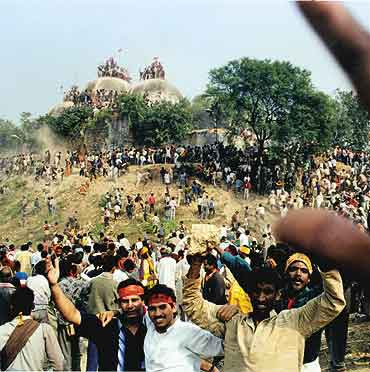
Babri masjid was attached in 1949 and Hindus and Muslims were legally barred from offering prayers there. In 1986 doors to the gates were opened by a court order and regular puja started taking place. It was done on the demands of VHP that Babri Masjid was built on the birth place of Rama and it should be handed over to the Hindus.
In February 1986, on the petition of a local advocate, sessions judge at Faizabad without consulting or hearing the Muslims who were party to this case, passed an order opening the locks of the Babri Masjid.
The Muslim Women (Protection of rights on divorce) Act, 1986 was passed in May of 1986 so it is wrong to say that Babri Masjid doors were opened by Rajiv Gandhi to placate Hindus who were angry because of reversal of a Supreme Court judgement. In fact, a case can be made that this bill was introduced because Muslims were angry at the illegal occupation of Babri Masjid by Hindus.
Babri Masjid Movement Coordination Committee was formed in 1986 to fight the case of Babri Masjid at the national level. The major demand was that this dispute between Hindus and Muslims can only be resolved by the judiciary. At no point, Muslim leadership said that we should use force to liberate the mosque. Muslims always believed that the law will uphold the truth and wrong done to the community will be corrected by the courts.
With the death of Rajiv Gandhi, BJP saw an opportunity to grow politically. LK Advani, leader of the BJP adopted the VHP demand as BJP's goal to build the Ram Mandir at Ayodhya in place of Babri Masjid. Advani whipped up the communal passions by leading a modern day rath yatra which was eventually stopped in Bihar by Lalu Prasad Yadav.
In 1992, karsevaks were called to descend to Ayodhya. Congress government at the center did nothing to stop the karsevaks from reaching Ayodhya. I pleaded with the Supreme Court and the Prime Minister to put a curb to this gathering because Sangh Parivar's promise of not touching the masjid structure cannot be believed.
Listen to the interview:
Kalyan Singh, the BJP Chief Minister of UP at that time instructed officers of UP Police that no harm should be done to the karsevaks. Central para-military forces were stationed just outside Ayodhya and none of them moved on that fateful day. At mid-day on December 6, I told the PM that I don't want people to be killed but the least you can do is to fly your forces at low altitude over Ayodhya and that will scatter the karsevaks away.
I recall the immortal statement by VP Singh that it is not the three domes of Babri Masjid that are being demolished but three organs of the state – the executive, the judiciary, and the legislature.
I believe that PV Narsimha Rao had an understanding with the BJP leaders and knew that Babri Masjid will be demolished. He probably thought that once the masjid is demolished the problem will go away.
The masjid has been demolished but in my mind the Babri Masjid still exists because the ground where the masjid structure once stood is still there. We will not allow any construction to go on at the site. And the court case continues as the question remains as to who legally owns the site.
Meanwhile, Narsimha Rao passed a law and took over the entire site and 70 acres around it. We challenged the constitutionality of that bill. The Supreme Court made a very important decision saying to the government that you can take away the rights of the Muslims to litigate on the title. It ordered the Allahabad High Court to constitute a special bench to hear the cases related to the ownership of the site. The ruling added that if it is proved that the site belongs to the Muslims then the masjid will be rebuilt and if it is proved that it belongs to the Hindus then the temple will be built. In either case, the other community should be able to build a prayer house for itself at some distance from the original site.
Regular hearings have taken place by this special bench in cases that until the SC decision were lying dormant. Special bench hearings helped advance the status of the cases. I have followed these proceedings from the beginning and in my view the Hindu case is very weak from the legal point of view. Hearings are almost complete and final arguments are being given by both sides. We expect that the decision be made in our favour.
When we win the case, I fear that many "sympathizers" will come and expect us to give up the site trying to convince us that since the masjid structure is not there and also in the interest of long term Hindu-Muslim relations we should hand over the site to the Hindus. But my question to them is this – where will it end? You will claim another masjid tomorrow by taking it over or demolishing it and expect us to give up our rights in the name of friendship and fraternity but you don't care for these ideals when it comes to claiming masjids as your own and writing false history.
Mughal Emperor Aurangzeb after the capture of Golconda fort destroyed the Jama Masjid there. But same "fanatic" Aurangzeb who lived close to 20 years in Deccan, close to Ajanta and Ellora, never touched those. There was a reason to destroy the Jama Masjid in Golconda and if a temple was destroyed there has to be a political or military reason for its destruction. On the other hand there are many firmaans of Aurangzeb making grants for the upkeep and maintenance of many temples. Texts of some of these firmaans have been published in the journal Muslim India.
Babar probably never visited Ayodhya. An inscription on the Babri Masjid said that it was built by Babar's command by his officer called Meer Baqi. Babar did not conquer India by defeating any Hindu ruler. He defeated Ibrahim Lodhi in the Battle of Panipat. Even Ayodhya was won by battling local Muslim rulers so the question of destroying Ram temple as a consequence of a bitter battle with Hindus does not arise. There is no record of Babar destroying any temple in his autobiographical work Tuzk-e-Babri.
Muslims first came to Ayodhya in the beginning of the eleventh century. So the Ram temple continued under Muslim rule for four hundred years waiting for a Babar to come and destroy it. This argument makes no sense. Excavations in and around the site point to Muslim settlements in the area with evidence of glazed poetry and animal bones. So even prior to the temple building Muslims have been living in that area.
There have been many attempts at negotiations including the Shankracharya but my personal feeling is that all of them have been too close to the Sangh Parviar so no honest negotiation was possible. All their offers were absurd and impossible to accept. Having won over Rajiv Gandhi, who allowed the foundation laying of the gate of the proposed temple and then Narsimha Rao who let them destroy the masjid structure the Sangh Parivar wanted Muslims to simply surrender the site.
Muslims will not surrender and not take up arms. In a democracy your weapon is law, and we shall explore every possible legal means for our rights. We do our best and utilize all legal and democratic means to seek justice, but if the court decides against us, we will accept it as I am not prepared to exhaust all the resources of my community for just one particular masjid.
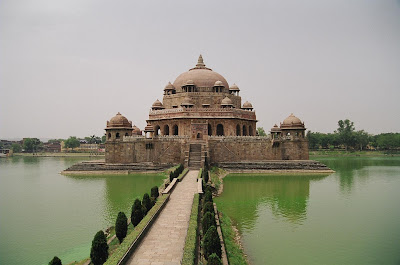
Patna : The 16th century tomb of emperor Sher Shah Suri, standing in a tank filled with acidic industrial discharge and surrounded by illegally constructed buildings, is set to get a new lease of life with the Patna High Court directing the Archaeological Survey of India (ASI) to preserve the monument in Bihar's Rohtas district.
Sher Shah Suri
The tomb in Sasaram town, about 150 km from here, has fallen into disrepair due to years of neglect and exposure to pollution. Some parts of the monument have also been encroached upon.
On Monday, the Patna High Court directed the ASI to initiate measures to protect the monument. The court order was in response to a public interest litigation (PIL) filed by a Sasaram resident, who alleged that the state government was not taking adequate steps to preserve the tomb.
Officials said the court has asked the ASI to work in tandem with the Rohtas district administration to solve the problem of encroachment and reduce pollution of the area surrounding the monument.
"The court directed the ASI to clean silt of the water tank in which the tomb stands, make it pollution free and remove the encroachments from the tomb premises," a court official said.
The court has ordered that the ASI and the district administration should ensure that polluted water from the town does not enter the tank in which the five-storey monument stands.
Industrial discharge has made the water in the tank acidic, which is threatening the structure of the tomb.
ASI officials said the body has last year warned the state government about the ecological threats to the tomb.
It had earlier moved the Patna High Court to protect the monument by removing illegal constructions. It had also approached the district administration for revival of inlet and outlet channels of the tank, and to prevent the immersion of idols, washing of clothes and its use for bathing.
The district administration allowed the immersion of idols in the tank from 1980 after a pond in the neighbourhood dried up.
Sher Shah Suri's Tomb
"If urgent steps are not taken immediately, it would be impossible to save the stone mausoleum for future generations," an ASI official said.
"The tank's water has turned acidic. It is posing a serious threat to the mausoleum's life - it will destroy the building material and weaken the structure. It also pointed out that the tank's depth has decreased alarmingly in the last two decades," the official added.
Since 1977, illegal buildings, including Hindu temples, have been built within the mausoleum premises. However, the state says it spends about Rs.700,000 on the tomb's maintenance each year.
The historical tomb was declared a national heritage under the Ancient Monuments and Archaeological Sites and Remains Act (1958). The ASI took it for preservation and protection in 1938.
Suri (1472-1545) was also known as Sher Khan or the Lion King. Although his empire was short-lived, from 1539 to 1545, he left a fairly deep imprint in history.
North Eastern states in India are comprised of more than 213 ethnically diverse groups and communities with distinct languages, culture, and social identities different from mainland India. Women in this region enjoy greater mobility. ‘Purdah’ and caste system is not so prevalent here. Women’s participation in economic activities is quite high and the Asia’s largest women’s markets ‘Ima market’ (‘Ima Keithel’ or Mother’s Market) is situated in Imphal, Manipur. All these factors have definitely left a positive impact in the life of Muslim women of this region. But patriarchal notions predominates all the liberal values and have restricted women’s mobility even in this part of India.
Like rest of India, women’s access to public religious places like masjids is restricted by the Muslim society of North East India. Women offering prayer five times a day in mosques is a taboo in almost all societies in India. It is often preached that women world is inside the four corner of the house of her husband and she should be happy with the ‘household’ work only.
Two women take a break from their work and offering noon-prayer in the Masjid
Inside the Masjid: Covered area is meant for women to offer namaz
Men looking at the entrance of the masjid exclusively built for women to offer prayers 5 times a day, in Shillong. September 21, 2008
Finally a shoe rack – Only for women
The establishment of a masjid exclusively for women in Shillong, Meghalaya is an answer to all these stereotyping tactics against women. The Masjid was inaugurated on August 29, 2008 and about 150 women took part in prayer on the very first day. ‘It’s a gift to our mother and sisters for the Ramadan’, said Sayedullah Nongrum, MLA and Secretary of the Shillong Muslim Union since 1982. Shillong Muslim union established in 1905 took the initiative in establishing a masjid that had facility for women as well.
Shillong Muslim Union was founded by Khan Bahadur Amjad Ali with the aim of catering the religious, socio-cultural needs of muslims in the entire East Bengal from Siliguri to Cox Bazar and from Chittagong to Dibrugarh in the present Assam. After partition of India, it narrowed down its jurisdiction to Assam. When Meghalaya was created in 1972 its jurisdiction was curtailed to only Meghalaya. Sir Sayedullah, Moinul Haque Choudhury had presided this organization.
Sayedullah Nongrum, MLA and secretary of Shillong Muslim Union who initiated and mobilized members of Shillong Muslim Union to establish the masjid for women
Shillong Muslim Union has established Unshyprio College which teaches Science, Art and Commerce and is considered as one of the best ranked colleges in the city. The most impressive part of the working of this organization is that they are secular in their activities and students across all culture and religion can come and study here. In fact right now non-Muslim students have outnumbered Muslim students in this college.
Shillong Muslim Union has a women wing too called ‘Shillong Mahila Majlish’ established in 1958 with the Zubeida Ataur Rehman as the founding president. It is a socio-religious organization meant for the upliftment of the muslim women. This forum became a meeting place for muslim women in Shillong. This year the organization celebrated its golden jubilee and brought out a souvenir.
Justifying women’s access to the masjid, Nongrum said, ‘I have seen Muslim women offering prayers with great difficulty in absence of space and privacy especially while at work or when she is out of the home. Many times I offered my office room to use for offering prayers. If our women ca go to market which is considered to be the worst place for a muslim women under the Sharia, we the menfolk are not objecting to it then why not women going to a masjid and offer prayer there? Why the fanatics are objecting to it? ‘
Mr. Nongrum strongly believes that the interpretation of Islamic laws is not free from the patriarchal notion. He said ‘I don’t believe in the interpretation of the fanatics. Purdah means the inner shyness of women. If the shyness is retained she can go anywhere. There’s nothing forbidden in going to a place and offer prayer.’ He said that about 40-50 women attends prayer everyday and the number is increasing day by day. Nongrum lamented that fanatics are forbidding women to come and pray in the masjid and he challenged the fanatics and said ‘they should come here and show me the scripts which prohibits women to go to a masjid. If men and women can pray together during hajj, why not in Shillong masjid?
Women, who participated in the prayer meeting on the 29th August, 2008 expressed great satisfaction and delight over the establishment of the masjid. Syeda Mushfiqua Haque and her daughter in law said ‘when we went for the prayer, we felt that we have achieved something and it gave us satisfaction of being empowered’.
Syeda Mushfiqua Haque with her daughter in law who attended prayers in the masjid
The opening of this masjid in Shillong is a step toward gender equality. If such initiatives are taken in every field and create space for women; Muslim women in this region too can contribute to their community and society.